Surrey Bike Bank Events
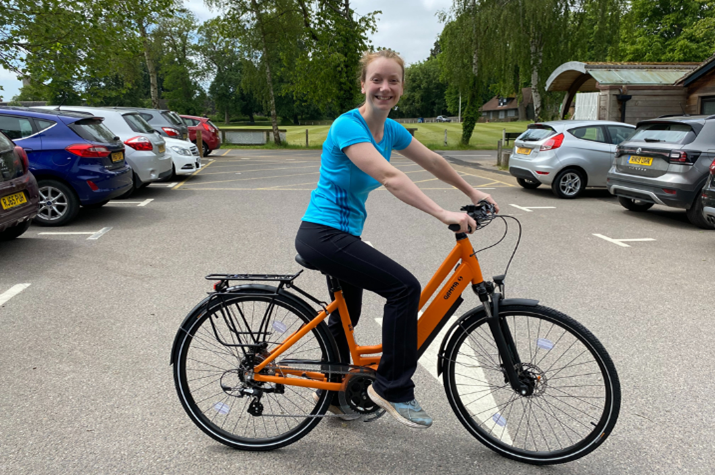
Surrey Bike Bank has given out over 750 bicycles to residents, helping them get to work or school, by upgrading unwanted and damaged bikes through upskilling opportunities for excluded young people and ex-offenders – which has been shown in other areas to reduce the re-offending rates.
Cycling is a popular activity in Surrey, with 37% of adult residents and 74% of children owning a bike. It’s a great way to get around Surrey, save a bit of money by replacing short car journeys with a ride, and getting some exercise in the great outdoors.
However, there are many of us who own a bike but aren’t sure how to maintain or repair it; meaning there are lots of bikes across the county in sheds and gardens, gathering dust and not being used.
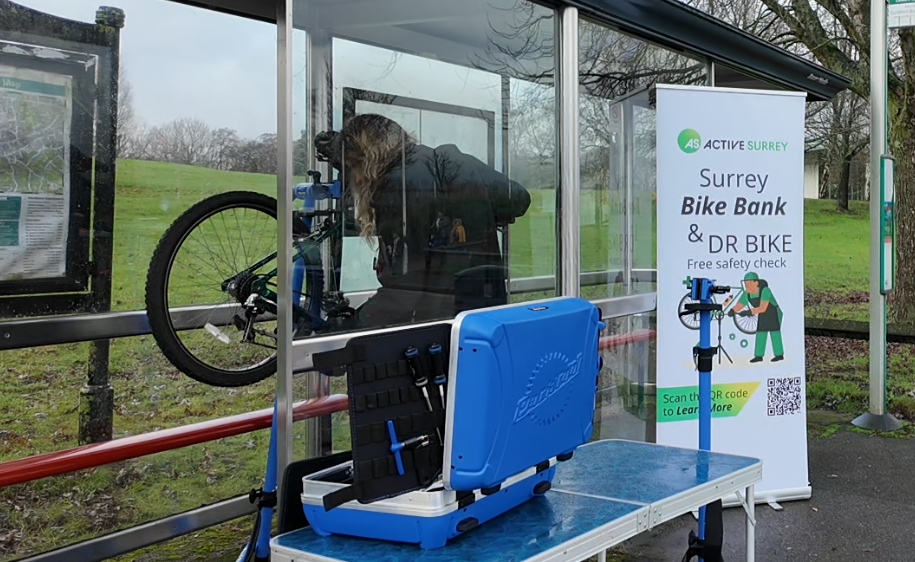
Surrey Bike Bank can help keep Surrey residents rolling, through their events focused on practical help. Dr Bike events offer general check-ups, brake and gear adjustments, as well as other quick fixes by one of our trained mechanics. Whilst Bike Maintenance events are designed to teach basic skills to those residents who are keen to learn how to fix and maintain their bikes themselves. Both types of events help people to save money, learn new valuable skills, and encourage them to keep cycling.
Upcoming Dr Bike events:
-
 Friday 13th March - St Martin's, Dorking
-
Saturday 21st March - TimperleyFix, Redhill
-
Tuesday 7th April - World Health Day, Farnham
-
Friday 15th May - Bell Farm, Walton
-
Friday 5th June - Epsom Hospital's Green Day
-
Sunday 21st June - TimperleyFix, Redhill
-
Saturday 27th June - G Live, Guildford
Surrey Bike Bank also run bike donation events, where residents can drop off their unused bikes to clear much needed space in garages and sheds. The team then repair the bikes, with the work done by either apprentices or inmates at prisons in Surrey and the surrounding area. Similar work in Manchester, by the waste contractor SUEZ and the council through the fantastic Revive hub, saw reoffending rates go down to 5%, from the typical 25% rate, by upskilling former offenders and providing work opportunities.
Once road worthy, bikes are then redistributed out into the community to those in need, and who want to cycle but may not be able to afford a new bike or to fix their existing wheels.